21 Houston Hospital Births in 2025: What the Numbers Taught Me About Support, Advocacy, and Outcomes
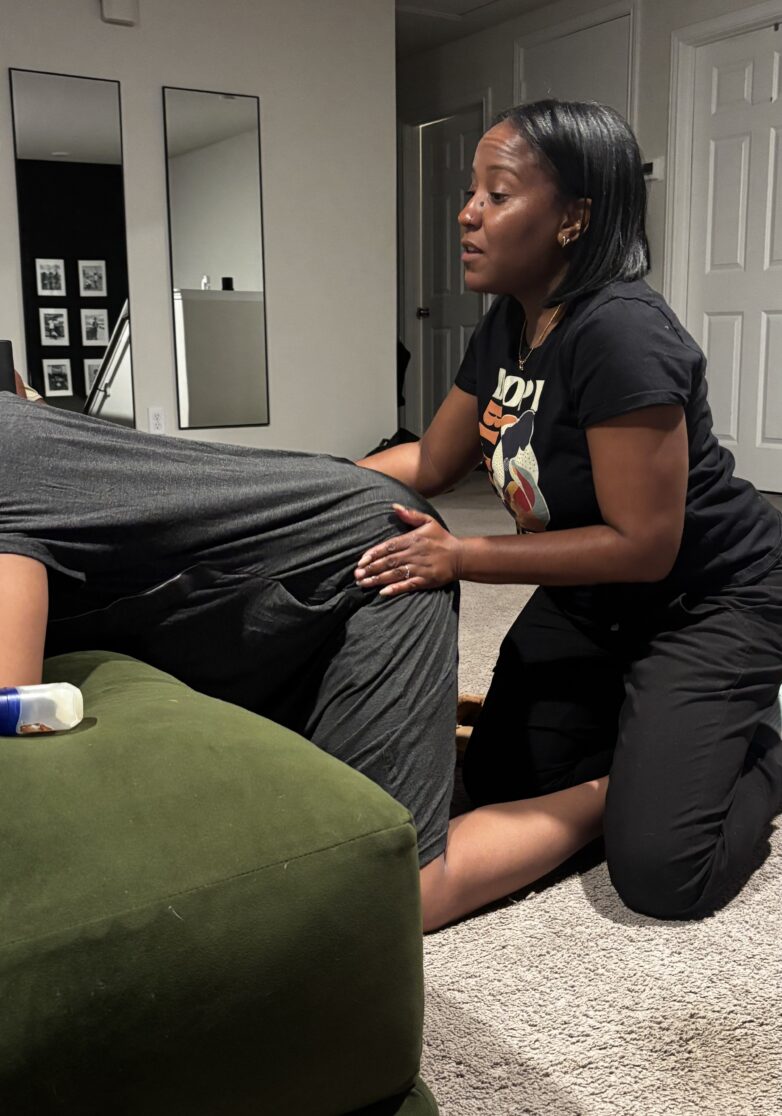
Twenty-one families trusted me to support them through birth in 2025. Twenty-one different stories, twenty-one different paths to meeting their babies, twenty-one opportunities to learn what families actually need during Houston hospital births.
As both a labor and delivery nurse who has worked in Houston hospitals for over a decade and a certified doula through The Birthing Noire Collective, I track outcomes not to prove anything, but to understand what’s working and what families are actually experiencing in our local hospitals.
Here’s what 2025 taught me.
The Numbers: What Actually Happened
Total clients supported: 21
Labor type:
- 52% (11 clients) were induced
- 33% (7 clients) went into spontaneous labor
- 14% (3 clients) had planned cesarean
Birth outcomes:
- 67% (14 clients) vaginal birth
- 19% (4 clients) unplanned cesarean
- 14% (3 clients) planned cesarean
What this means: Despite more than half my clients facing induction—a factor that typically increases intervention rates—two-thirds still achieved vaginal birth. And the one-third who had cesareans? Every single one made informed decisions throughout their births, whether cesarean was planned or became necessary unexpectedly.
The Biggest Lesson: Induction Doesn’t Have to Mean Cesarean
Fifty-two percent induced. That’s the reality of modern Houston hospital birth, not the exception.
What made me take notice: despite that high induction rate, my overall vaginal birth rate remained 67%. Even more striking—only 19% of clients had unplanned cesareans, below the national cesarean rate of approximately 32%.
This taught me something crucial: induction isn’t the problem. Lack of support during induction is the problem.
When families have:
- Understanding of WHY induction is being recommended
- Strategic timing (adequate cervical ripening before Pitocin)
- Aggressive positioning throughout induced labor
- Advocacy for Pitocin management (turning down, turning off when needed)
- Continuous support through the marathon length of induction
- Partners prepared with the P.A.R.T.N.E.R. Method™
…then induction doesn’t have to automatically lead to cesarean.
Read the full analysis of what helped 67% of induced clients achieve vaginal birth
The Second Lesson: Cesarean Birth Deserves Equal Support
Seven families—33% of my clients—had cesarean births. Four were unplanned, arising during labor. Three were planned for various medical and personal reasons.
Here’s what supporting those seven families taught me: how birth happens matters less than how families are supported through it.
The families who felt heard, who understood why decisions were being made, who had their preferences honored when possible, who had time to process when time existed—those families had positive experiences even when birth was surgical.
The issue isn’t cesarean birth itself. The issue is cesarean birth happening TO families rather than WITH families.
Every one of those seven cesarean births involved:
- Clear explanation of why it was necessary or chosen
- Respect for the family’s emotions (disappointment, fear, grief are valid)
- Advocacy for preferences (immediate skin-to-skin, delayed cord clamping when safe, minimal separation)
- Postpartum support focused on both physical recovery from surgery AND emotional integration of the experience
Read more about how I support families through cesarean birth—planned and unplanned
The Third Lesson: Hospital Birth Needs Insider Knowledge
Every single one of my 21 clients birthed in a Houston hospital. Memorial Hermann, Houston Methodist, Texas Woman’s Hospital—I supported families across multiple facilities.
What my dual background as L&D nurse + doula brought to those births:
- Clinical knowledge of when interventions are necessary versus routine
- Understanding of hospital protocols and what’s actually negotiable
- Ability to read fetal monitoring and understand what’s concerning versus normal variation
- Relationships with hospital staff that help advocacy go smoothly
- Translation skills to explain what medical teams are saying in real-time
Families don’t need someone who’s anti-hospital. They need someone who knows how to work WITHIN hospitals to protect their autonomy while ensuring safety.
The Fourth Lesson: Partners Need Preparation, Not Just Presence
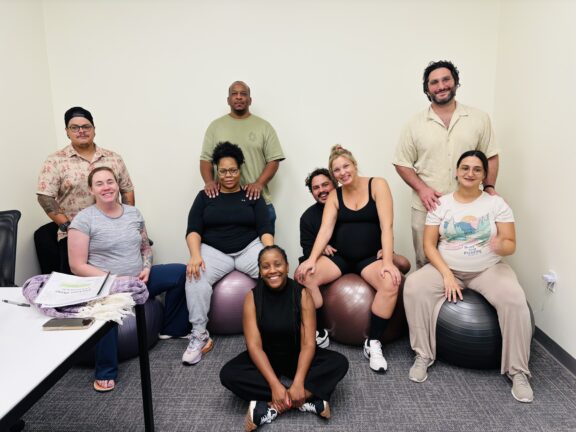
In every prenatal session, I teach partners the P.A.R.T.N.E.R. Method™:
- Presence: Stay grounded when she’s in intensity
- Advocacy: Speak up for her needs
- Reassurance: Offer comfort without trying to fix
- Touch: Provide effective physical support
- Nurture: Care for her (and yourself)
- Empowerment: Build her confidence
- Respect: Honor her process
The partners who learned this method showed up powerfully during birth. The ones who didn’t felt helpless and overwhelmed.
Partners aren’t just there to cut the cord and take photos. They’re essential advocates, especially during shift changes when I’m the only consistent presence but they’re the one with legal authority to make decisions if needed.
What I’m Taking Into 2026
These 21 births taught me that what families need most isn’t someone to guarantee outcomes. They need someone to:
- Help them understand their options and make informed decisions
- Advocate when they’re too tired or overwhelmed to advocate for themselves
- Provide continuous support through the unpredictable nature of labor
- Validate their emotions when things don’t go as planned
- Help them integrate their birth experience—whatever it was—into their story
Numbers tell you what happened. But behind every statistic is a family who trusted me with one of the most vulnerable experiences of their lives.
Fifty-two percent were induced. Behind that number: 11 families who learned that induction doesn’t have to mean losing control.
Thirty-three percent had cesareans. Behind that number: 7 families who made empowered decisions even when birth was surgical.
Sixty-seven percent birthed vaginally. Behind that number: 14 families who worked hard, advocated effectively, and met their babies the way they hoped.
And 100%? They all mattered. Every single birth taught me something. Every family deserves support that honors their unique journey.
Your Houston Birth Deserves This Support
Whether you’re facing induction, worried about cesarean, planning your second birth after a traumatic first, or simply wanting continuous support through Houston hospital birth—The Birthing Noire Collective is here.
You get:
- Prenatal preparation including birth plan creation and partner training
- Continuous support during labor from someone who understands both hospital protocols and physiological birth
- Postpartum visits focused on your recovery and emotional processing
- Connection to lactation support when needed
- Real L&D nurse + doula expertise
Ready to experience birth support that’s rooted in real hospital experience, not just ideals?
Lets discuss your specific situation and how The Birthing Noire Collective can support your Houston birth—whatever path it takes.