Supporting Births at Houston Methodist Willowbrook: A Doula’s Insider Perspective

I’ve supported six births at Houston Methodist Willowbrook over the past year—five with the midwifery team and one with an OB provider. And I’ll be honest: I genuinely look forward to supporting births there.
As both a labor and delivery nurse who has worked in Houston hospitals for over a decade and a certified doula through The Birthing Noire Collective, I’ve been inside a lot of Houston labor and delivery units. Each hospital has its own culture, its own rhythm, its own way of approaching birth.
Willowbrook? It’s calm. The providers are respectful. The nurses are well-trained and attentive. And families consistently have positive experiences there—which matters more than any fancy amenity.
If you’re planning to birth at Houston Methodist Willowbrook and wondering what it’s like to have doula support there, let me give you the insider perspective.
What Makes Willowbrook Different
The Culture Is Genuinely Collaborative
Providers respect each other. The midwives and OBs work as a true team. When labor gets complicated and the midwifery team needs a second opinion or additional support, the OB physicians come in, address everyone in the room (not just the midwife), build rapport with the patient, and give their professional opinion without taking over unless truly necessary.
I’ve seen this firsthand. One of my clients was laboring with the midwifery team when concerns arose during pushing. She’d been pushing for a few hours with little to no progress due to baby’s position. The OB came in and offered vacuum assistance. When that didn’t work, she gave her professional recommendation—collaborating with the midwives—that cesarean was the safest next step. My client and her partner agreed, feeling fully informed and supported in the decision.
This is the kind of collaborative care that makes complicated births feel less traumatic. Everyone worked together, everyone communicated clearly, and my client felt like an active participant rather than someone things were happening to.
Providers respect doulas. From the nurses to the midwives to the OB physicians, I’ve felt welcomed at Willowbrook. Nobody questions why I’m there or treats me like I’m in the way. Nurses work with me, not around me. Providers acknowledge my presence and sometimes even ask for my input on positioning or comfort measures.
Providers respect patients. This seems basic, but it’s not universal. At Willowbrook, I consistently see providers who listen, explain thoroughly, wait for questions, and honor birth preferences when it’s safe to do so.

The Midwifery Team Shows Up
If you’re choosing midwifery care at Willowbrook, you should know: the midwives don’t just show up to catch your baby.
I’ve watched the midwifery team sit with my clients during labor—not for a quick assessment and then disappear, but actually stay in the room. They give advice on breathing, help mom relax through contractions, suggest position changes, and provide the kind of hands-on support you’d expect from a midwife.
They’re low-intervention and hands-off in the best way—trusting birth to unfold naturally when it’s progressing well. But they also have the clinical knowledge to recognize when intervention becomes necessary, and they’re not hesitant to use it when needed or call on their OB colleagues for support.
The midwifery team rotates shifts, but here’s what makes Willowbrook different: during your prenatal care, you meet all the midwives. So when you go into labor, whoever walks into your room isn’t a stranger—you’ve already built rapport with them. This continuity of relationship, even without continuity of the exact same provider, makes a real difference in how comfortable families feel.
Every midwife I’ve worked with there has been calm, respectful, and excellent at true informed consent. They explain risks and benefits, give you time to ask questions and discuss with your partner, and honor your decisions.

The Nurses Are Exceptional
The nursing staff at Willowbrook consistently impresses me.
They’re well-trained, have excellent bedside manner, and are genuinely attentive to their patients. I’ve never felt like my clients were just another room number to check on between charting.
They support unmedicated birth. If you want an epidural-free birth, the nurses at Willowbrook will work with you. They suggest positions, help you access the tub, give you space when you need it, and stay supportive when labor gets intense.
They support medicated birth without judgment. If you want an epidural, just ask. Nobody makes you feel like you’re failing or taking the easy way out.
They respect birth plans. I’ve watched nurses read birth plans carefully and genuinely try to accommodate preferences. They’re mindful about interventions and flexible when possible.
What It’s Actually Like: The Practical Details
The Childbirth Suites vs. Standard Labor Rooms
Let’s talk about the rooms, because this comes up a lot.
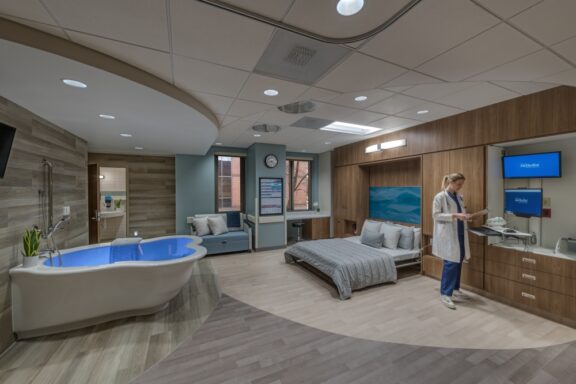
Willowbrook has beautiful childbirth suites—they’re spacious, nicely decorated, and feel less clinical than standard labor rooms. These suites have Murphy beds that fold into the wall and birth tubs with jacuzzi jets for hydrotherapy. They’re genuinely lovely spaces for laboring.
However, they’re first-come, first-served, and they book out fast. If you’re planning an induction or scheduled for off-peak hours, you have better odds. If you come in during a busy time, you’ll likely get a standard labor room.
Here’s the good news: the standard labor rooms are still very nice and they have deep tubs for hydrotherapy. So while the childbirth suite is lovely, you’re not missing out on comfort or function in the regular rooms.
The not-so-good news: furniture can be limited. At one particularly long birth, the dad couch wasn’t available—just a reclining chair. After 24+ hours of labor, dad was uncomfortable. As the doula, I didn’t have a dedicated chair either, so I rotated between the birthing ball (when mom wasn’t using it) and the nurse’s stool. Long births with no back support are rough.
This isn’t unique to Willowbrook—most hospitals have furniture limitations—but it’s worth knowing about if you’re preparing for a potentially long labor.

Admission and Access
Triage: Only one support person is allowed in triage with you during the admission process. If you have both a partner and a doula, one of you will wait outside.
There’s a comfortable waiting area right outside triage, so it’s not like your doula is sitting in the parking lot. As soon as you’re moved to a labor room, everyone can join you.
Parking and navigation: Both are easy. The hospital is well-marked, and getting to labor and delivery is straightforward even if you’re in active labor and not thinking clearly.
For doulas with long commutes: There’s a Holiday Inn very close to the hospital. I’ve used it a few times when supporting clients who live far from my home—it’s helpful to have somewhere to rest during early labor or before the long drive home after birth.
Movement and Monitoring
The labor rooms are spacious enough for movement, position changes, and using tools like the birthing ball or peanut ball.
Wireless monitoring: Willowbrook has the Novii wireless monitoring system. When it works, it’s fantastic—you can move freely without being tethered to the bed by monitor cords.
However, like at most Houston hospitals, it’s hit or miss. The Novii system depends on the building’s WiFi and Bluetooth connectivity. Sometimes it works perfectly; sometimes it drops signal and you’re back to wired monitoring. This isn’t Willowbrook’s fault—it’s a limitation of the technology itself that the Novii company needs to improve.
Intermittent monitoring: If you don’t have any medication on board and baby’s heart rate is reassuring, you can request intermittent monitoring instead of continuous. The staff is generally accommodating of this when it’s safe.
Birth Plans and Interventions
The staff at Willowbrook is very open to birth plans. Every nurse and provider I’ve worked with has been respectful of my clients’ preferences and accommodating when possible.
Most of my clients at Willowbrook have had low-intervention births. The culture there supports physiological birth when it’s progressing safely.
When interventions are needed, they’re discussed thoroughly. I’ve never felt like interventions were pushed for convenience—they’re offered when medically indicated, with clear explanation of why they’re being recommended.
The Golden Hour and Immediate Postpartum
Willowbrook respects the golden hour after birth. Skin-to-skin is encouraged, newborn procedures can be delayed, and you’re given time to bond with your baby without staff constantly interrupting.
Cesarean Birth Policies
One limitation: doulas are not allowed in the OR during cesarean births at Willowbrook. Only one support person (typically your partner) can accompany you.
This is disappointing because doula support during cesarean can be valuable, but it’s the hospital’s policy and it’s firm. As your doula, I’ll support you up until you go into the OR and be there waiting for you when you come out.
The Golden Hour and Immediate Postpartum
Willowbrook respects the golden hour after birth. Skin-to-skin is encouraged, newborn procedures can be delayed, and you’re given time to bond with your baby without staff constantly interrupting.
Cesarean Birth Policies
One limitation: doulas are not allowed in the OR during cesarean births at Willowbrook. Only one support person (typically your partner) can accompany you.
This is disappointing because doula support during cesarean can be valuable, but it’s the hospital’s policy and it’s firm. As your doula, I’ll support you up until you go into the OR and be there waiting for you when you come out.
Supporting Inductions at Willowbrook
One of my most memorable Willowbrook births was an induction that resulted in an unmedicated vaginal delivery.
My client was induced for medical reasons around 39 weeks. Despite starting labor artificially, she was determined to avoid an epidural if possible. The nursing staff and midwifery team were incredibly patient with her. They gave her time to labor, supported her movement and positioning throughout, and never pressured her toward pain medication.
She labored for hours with Pitocin, moving through positions, using the tub, breathing through intense contractions. The nurses adjusted the Pitocin thoughtfully—increasing when needed but not rushing. The midwife stayed present and supportive.
She birthed her baby vaginally without an epidural, supported every step of the way by a team that trusted the process and trusted her.
This is the kind of induction support Willowbrook excels at—medical management when necessary, but without losing sight of the person laboring or their goals.
Read more about how induction can lead to vaginal birth with the right support

Why I Love Supporting Births at Willowbrook
After supporting six births there, here’s what keeps me looking forward to going back:
The atmosphere is calm. Even when things get intense or complicated, there’s a groundedness to how staff operates. Nobody panics. Nobody rushes unnecessarily. There’s trust in the process and respect for the unfolding of birth.
The teamwork is real. I’ve watched midwives, OBs, and nurses collaborate genuinely—not territorially, not hierarchically, but as colleagues working toward the same goal: a healthy mom and baby and a positive birth experience.
Families consistently feel heard. Across all six births I’ve supported there, every family has told me they felt respected by their providers. They felt included in decisions. They felt like their voices mattered.
As a doula, that matters to me. I can provide excellent support, but if the hospital culture is working against us—if providers are dismissive, if nurses are rushed and inattentive, if birth plans are ignored—my job becomes exponentially harder.
At Willowbrook, the culture supports what I’m trying to do: help families have empowered, informed, positive birth experiences.

Tips for Families Birthing at Willowbrook
1. If the childbirth suite matters to you, ask about availability when you arrive. But don’t be disappointed if you get a standard room—they’re still very comfortable.
2. Create a birth plan and bring multiple copies. Staff respects them, so it’s worth taking the time to articulate your preferences.
3. Discuss monitoring preferences with your provider prenatally. If intermittent monitoring is important to you and you’re low-risk, talk about this ahead of time so everyone’s on the same page.
4. Ask about the tub during your hospital tour. Understanding how to access hydrotherapy can be helpful if that’s part of your coping plan.
5. Consider doula support. The staff welcomes doulas, and the hospital culture makes it easy for us to do our work effectively.
6. Know that the midwifery team rotates. You likely won’t have the same midwife you saw prenatally, but you can trust they’re all skilled and collaborative.
7. If you’re planning unmedicated birth, let your nurse know. They’ll support you, but they can’t read your mind—communicate your goals clearly.
8. Pack for a long labor if you’re being induced. Comfortable clothes for your partner, entertainment for early labor, and snacks they can eat (you’ll be restricted) make the marathon more bearable.
When Willowbrook Might Be Right for You
Willowbrook is an excellent choice if you:
- Want midwifery care with 24/7 CNM coverage
- Value a calm, respectful hospital culture
- Appreciate collaborative provider relationships
- Want access to both low-intervention and medical support as needed
- Plan to have doula support (we’re welcomed there)
- Prefer a hospital with attentive, well-trained nursing staff
The Bottom Line: Willowbrook Gets Birth Right
I can’t promise your birth at Willowbrook will go exactly as planned. Birth is unpredictable, and complications can arise anywhere.
But I can tell you this: across six births, I’ve consistently seen families treated with respect, providers who communicate well and collaborate genuinely, and a hospital culture that supports physiological birth when it’s safe while providing excellent medical care when needed.
That combination—respect for birth’s normal process alongside skilled medical support—is what makes Willowbrook stand out.
And as a doula who works across multiple Houston hospitals, I can say with confidence: when a client tells me they’re birthing at Willowbrook, I feel good about it.
Planning to birth at Houston Methodist Willowbrook and want doula support from someone who knows this hospital well?
Let’s discuss how The Birthing Noire Collective can support your specific birth plan at Willowbrook. Because having a doula who knows your hospital’s culture, policies, and staff makes a real difference.
Frequently Asked Questions
Q: Can I have a doula at Houston Methodist Willowbrook?
A: Absolutely. Doulas are welcomed at Willowbrook by the nursing staff, midwives, and OB physicians. I’ve supported six births there and have consistently felt like a valued part of the care team.
Q: Will I have the same midwife I saw prenatally?
A: Likely not. The Woman’s Choice Midwifery team rotates shifts, so whoever is on call when you go into labor will attend your birth. However, all the midwives work collaboratively and share a similar care philosophy.
Q: What if I need a cesarean—can my doula come to the OR?
A: Unfortunately, no. Willowbrook’s policy allows only one support person in the OR during cesarean births. Your doula will support you up until you go in and be there waiting when you come out.
Q: Are the childbirth suites really that much better than regular rooms?
A: The childbirth suites are more spacious and nicely decorated, but the standard labor rooms are also very comfortable and have great tubs for hydrotherapy. Don’t stress if you don’t get a suite.
Q: Does Willowbrook support unmedicated birth?
A: Yes. The nursing staff and midwifery team are very supportive of unmedicated birth. They’ll help with positioning, hydrotherapy access, and encouragement throughout.
Q: What about epidurals—are they readily available?
A: Yes. If you want an epidural, you can request one. There’s no judgment either way—staff supports your choice.
Q: How does intermittent monitoring work there?
A: If you’re low-risk and don’t have medication on board, you can request intermittent monitoring instead of continuous. Discuss this with your provider prenatally and remind your nurse of your preference when you’re admitted.
Q: Is parking difficult?
A: No, parking is easy and navigating to labor and delivery is straightforward.