Pelvic Floor Health for Houston Moms: What Every Pregnant Woman Needs to Know

If you’re pregnant, postpartum, or planning to conceive, there’s a part of your body that deserves more attention than it typically gets: your pelvic floor.
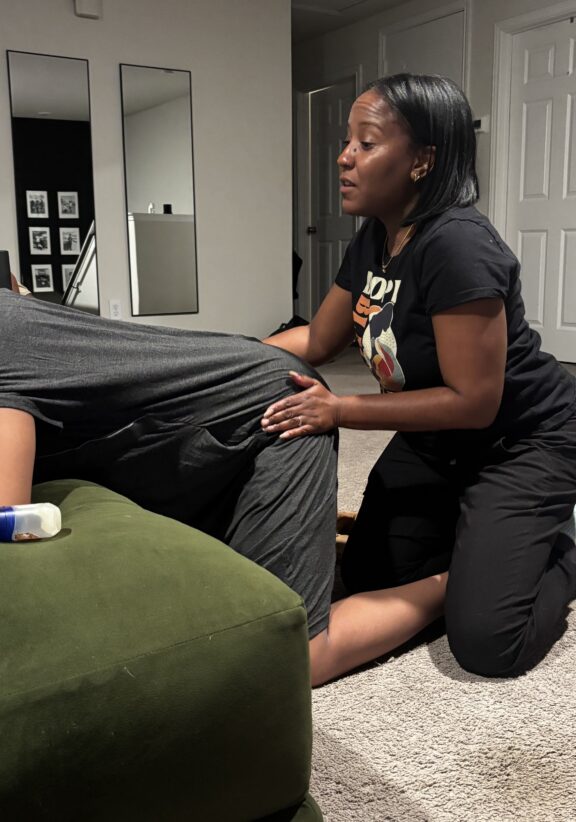
As a labor and delivery nurse who has worked in Houston hospitals for over a decade and the owner of Birthing Noire where I work as a certified doula, I’ve seen how pelvic floor health directly impacts pregnancy, labor, delivery, and postpartum recovery. Yet most women don’t think about their pelvic floor until something goes wrong.
That’s why I sat down with Dr. Chavez, a pelvic floor physical therapist at Route 2 Recovery Physical Therapy, to discuss everything Houston moms need to know about pelvic floor health—from preparation before pregnancy through postpartum recovery.
Watch the full conversation above, or keep reading for the key insights every pregnant woman needs to understand about pelvic floor health.
What Your Pelvic Floor Actually Does (And Why It Matters)
Your pelvic floor is a group of muscles that sit at the base of your pelvis, supporting your bladder, uterus, and rectum. But Dr. Chavez emphasizes that the pelvic floor doesn’t work in isolation—it’s connected to your entire body.
Your pelvic floor:
- Controls bladder and bowel function
- Supports pelvic organs during pregnancy and beyond
- Plays a role in sexual function and pleasure
- Stabilizes your pelvis and spine
- Connects directly to your hips, core, and breathing patterns
This is why pelvic floor issues often show up as symptoms that seem unrelated—chronic back pain, hip discomfort, or even difficulty breathing deeply. The root cause might be pelvic floor dysfunction, but because the symptoms appear elsewhere, many women and even healthcare providers miss the connection.
Signs Your Pelvic Floor Needs Attention
Most women don’t realize their pelvic floor is compromised until symptoms become uncomfortable or disruptive. Here’s what to watch for:
Common signs of pelvic floor dysfunction:
- Leaking urine when you cough, sneeze, laugh, or exercise
- Feeling of heaviness or pressure in your pelvic area
- Chronic lower back pain or hip pain
- Pain during sex
- Frequent urges to urinate or difficulty fully emptying your bladder
- Constipation or difficulty with bowel movements
Here’s what Dr. Chavez wants you to know: These symptoms are common, but they are NOT normal. Just because leaking after childbirth is common doesn’t mean you have to live with it. Pelvic floor therapy can address these issues at any stage—whether you’re dealing with them during pregnancy, immediately postpartum, or years later.
How Pregnancy and Birth Impact Your Pelvic Floor
Pregnancy itself—even before labor begins—changes your pelvic floor. The weight of your growing baby, hormonal shifts that relax ligaments, and postural changes all affect these muscles.
Then birth adds another layer of impact.
Dr. Chavez explains that several factors during labor and delivery can affect pelvic floor function:
Epidurals and catheters: While epidurals provide pain relief, they require a Foley catheter to drain your bladder during labor since you can’t feel when you need to urinate. This catheter use, combined with reduced sensation in the pelvic area, can contribute to pelvic floor changes postpartum.
Delivery position: The traditional back-lying position (lithotomy) that many hospitals default to actually works against your pelvic floor. When you’re flat on your back with your legs in stirrups, your pelvis can’t open as effectively. Positions like squatting, hands-and-knees, or side-lying allow your pelvis to expand and reduce pelvic floor strain.
Length of pushing: Extended pushing phases—especially in positions that don’t optimize pelvic opening—can increase pelvic floor trauma.
Interventions: Vacuum extraction, forceps, and episiotomies all directly impact pelvic floor tissues.
This is exactly why having a doula who understands optimal positioning and can help you advocate for physiological birth practices matters so much. Learn how Birthing Noire supports Houston families during labor
When to Start Pelvic Floor Therapy (Hint: Earlier Than You Think)
Dr. Chavez is passionate about one thing: pelvic floor therapy shouldn’t wait until you have problems.
Ideally, you’d see a pelvic floor physical therapist:
- Before pregnancy to assess baseline function and learn exercises that prepare your body
- During pregnancy to address any emerging issues and practice techniques for labor
- Immediately postpartum (6 weeks or sooner if issues arise) to support recovery
- Anytime you notice symptoms, regardless of how long it’s been since you gave birth
Think of pelvic floor therapy the same way you think about prenatal care—it’s preventive, not just reactive.
Starting pelvic floor exercises before conception helps strengthen these muscles for the work they’ll do during pregnancy and birth. During pregnancy, therapy can teach you diaphragmatic breathing, relaxation techniques, and optimal birthing positions that reduce pelvic floor strain during delivery.
What Actually Happens During Pelvic Floor Therapy
Many women hesitate to see a pelvic floor therapist because they’re nervous about internal exams or don’t know what to expect.
Dr. Chavez walks us through what a typical session looks like:
Initial conversation: Your therapist asks about your history, symptoms, lifestyle, and goals. This isn’t rushed—it’s about understanding your whole situation, not just isolated symptoms.
Full-body assessment: Your therapist evaluates your posture, back, hips, core strength, and breathing patterns. Remember, your pelvic floor doesn’t work in isolation. Issues might show up in how you stand, breathe, or move.
Education and practical tips: You’ll learn techniques like diaphragmatic breathing, pelvic mobility exercises, and positioning strategies. These are quick, effective tools you can use immediately.
Internal assessment (when appropriate): With your consent, your therapist may perform an internal exam to assess muscle strength, tension, and coordination. Dr. Chavez emphasizes that these are gentle, non-painful, and always optional. You’re in control of what happens during your session.
The goal isn’t just to “fix” problems—it’s to give you awareness of how your pelvic floor functions and tools to support it through pregnancy, birth, and beyond.
Practical Pelvic Floor Health Tips for Houston Moms
Whether you’re planning to see a pelvic floor therapist or just want to start supporting your pelvic floor now, here’s what Dr. Chavez recommends:
Start diaphragmatic breathing. This simple practice—breathing deeply into your belly rather than shallowly into your chest—engages your pelvic floor naturally and helps it coordinate with your core muscles. It also reduces stress and promotes relaxation, which is critical during labor.
Practice pelvic mobility exercises. Hip circles, gentle squats, and cat-cow stretches keep your pelvis mobile and reduce tightness that can contribute to pelvic floor dysfunction.
Avoid positions that strain your pelvic floor unnecessarily. During labor, back-lying positions put the most strain on your pelvic floor. Positions that open your pelvis—like squatting, hands-and-knees, or side-lying—work with your body’s design.
Address symptoms early. Don’t wait until leaking becomes severe or pelvic pressure becomes unbearable. The sooner you address pelvic floor issues, the easier they are to resolve.
Prepare your support system. Make sure your partner understands pelvic floor health basics too. Give them this hospital bag checklist so they’re prepared for birth
How Birth Support and Pelvic Floor Health Connect
As a doula, I see the connection between pelvic floor health and birth outcomes constantly.
When you understand how your pelvic floor functions, you can advocate for positions and practices during labor that protect it. When you have support from someone who knows which positions optimize pelvic opening, you’re more likely to have a smoother delivery with less pelvic floor trauma.
This is exactly what I do for Houston families through Birthing Noire. I help you:
- Understand your body’s physiology and how to work with it during labor
- Advocate for positions that support your pelvic floor rather than strain it
- Navigate hospital protocols that might not align with physiological birth
- Communicate with your provider about evidence-based practices
Pelvic floor therapy + informed birth support = the best possible foundation for your pregnancy, birth, and postpartum recovery.
Learn more about how Birthing Noire supports Houston hospital births
Postpartum: When Pelvic Floor Recovery Really Begins
After birth, your pelvic floor needs dedicated attention and care.
Common postpartum pelvic floor issues include:
- Urinary leaking (especially when coughing, sneezing, or exercising)
- Feeling of pelvic heaviness or pressure
- Pain during sex
- Difficulty fully emptying your bladder
- Constipation or hemorrhoids
All of these can be addressed with pelvic floor therapy.
Dr. Chavez recommends starting pelvic floor therapy around 6 weeks postpartum—or sooner if you’re experiencing significant symptoms. Early intervention prevents these issues from becoming chronic problems that affect your quality of life for years.
And while you’re preparing your postpartum recovery, don’t forget the other essentials your body will need. See what every postpartum mom needs for comfortable recovery →
Finding Pelvic Floor Support in Houston
If you’re in the Houston area and want to work with Dr. Chavez, you can find her at Route 2 Recovery Physical Therapy. She specializes in women’s health and pelvic floor therapy, supporting women through pregnancy, postpartum, and beyond.
And if you’re looking for comprehensive birth support that includes advocacy for pelvic-floor-friendly positions and practices during labor, that’s exactly what I provide through Birthing Noire.
The combination of pelvic floor therapy + doula support gives you the strongest foundation for a healthy pregnancy, empowered birth, and smooth postpartum recovery.
The Bottom Line: Your Pelvic Floor Deserves Attention
Your pelvic floor is foundational to your health during pregnancy, birth, and for the rest of your life. Yet most women only think about it when something goes wrong.
Start paying attention now:
- Notice if you have any symptoms of dysfunction
- Consider seeing a pelvic floor therapist before pregnancy or early in pregnancy
- Learn positions and practices that support your pelvic floor during labor
- Address postpartum issues early rather than accepting them as “normal”
You don’t have to leak when you sneeze. You don’t have to feel pelvic heaviness. You don’t have to accept pain during sex.
These issues are common, but they’re treatable—and often preventable with the right preparation and support.
Want More Support for Your Houston Birth?
Watch the full interview with Dr. Chavez above for detailed insights into pelvic floor health, labor positions, and postpartum recovery.
Subscribe to my YouTube channel for more expert interviews, birth stories, and practical preparation tips for Houston families: Subscribe here
Ready to ensure you have comprehensive support for your Houston hospital birth—including advocacy for positions that protect your pelvic floor?
Learn about Birthing Noire doula services →
Let’s to discuss how we can support your pregnancy, birth, and postpartum journey.
Because your pelvic floor health matters—and you deserve support that recognizes that.
Thank you for taking the time to read this post. Stay tuned for more updates!



You Might Also Like